Local Polls a Test for an Electorate Demanding Radical Change
LOCAL GOVERNMENT ELECTIONS
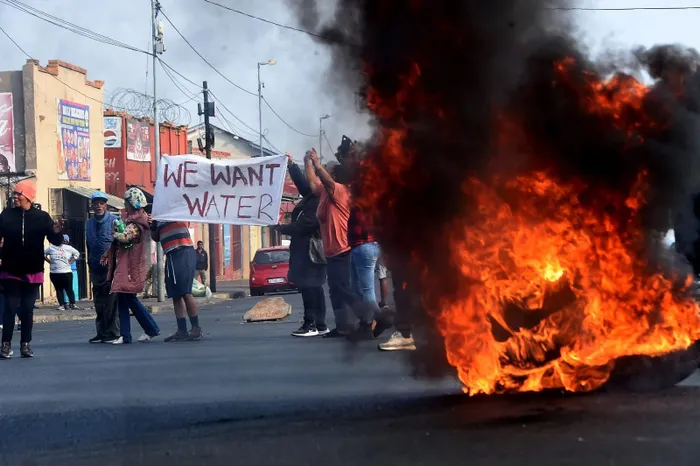
Against the background of South Africa's service delivery crisis, voters should be driven by pragmatism when they decide who to vote for in the upcoming Local Government Elections. The time for party loyalty or partisanship is gone, says the writer.
Image: Itumeleng English/Independent Newspapers
Prof. Bheki Mngomezulu
The date of the 2026 Local Government Election (LGE) is set for November 4, 2026. Political parties have started their campaigns. As has been the case in previous elections, new political parties have been established.
Traditionally, political parties spend a lot of money crafting election manifestos which they then present to the electorate. Unfortunately, after the elections, these parties never come back to the voters to give them feedback on what they have been able to do and where they have failed. Service delivery cries fall on deaf ears.
The irony is that people keep on voting for the same political parties or individuals who promised them services but never delivered. This trend has continued unabated for years. As a result, many politicians have embraced this practice as a norm since it has worked for them.
But while this is true, the 2026 LGE will be different in many ways. As such, it will demand new strategies from political parties and independent candidates.
In June 2026, the Auditor-General, Tsakani Maluleke, tabled her 2024-2025 report on the performance of South Africa’s municipalities – metros, district and local municipalities. The report concluded that of the 257 municipalities around the country, only 39 received a clean audit outcome. This translated to a mere 15%. The figure was lower than the 41 municipalities that received a clean audit opinion previously.
This means that most municipalities failed to execute their constitutional mandate – which explains the spate of service delivery protests triggered inter alia by governance failures and corruption.
Similarly, the second factor is that the National Treasury announced that it had decided to withhold municipal funds from 69 municipalities that were accused of noncompliance. These municipalities had to be placed under scrutiny before the National Treasury announced that such funds would be gradually released from July 31, 2026.
Failure by municipalities to comply with Treasury regulations points to a couple of issues.
One is the evident lack of capacity among municipal staff responsible for municipal finances. Another causal factor could be political influence, which renders administrative staff powerless. The third factor could be blatant corruption. Should voters retain such people in municipalities or give others a chance? This is one question that will make this election very interesting.
For the first time since 1994, the ANC will contest this election facing two unprecedented challenges.
Firstly, it was bruised by the 2024 general election, which saw it failing to reach the fifty-plus-one threshold needed to run the country alone.
Secondly, for the first time since the first LGE in 1995/1996, the ANC will contest this election without the SACP, which took a decision to contest the election independently.
These two factors mean that the ANC will have to work even harder than before to either keep those municipalities it obtained in the 2021 LGE or gain new ones. The trust deficit between the ANC and the electorate, evidenced in the 2019 and 2024 general elections as well as the 2021 LGE, implores the ANC to dig deeper. Similarly, this ANC weakness will motivate smaller parties and independent candidates to challenge it at the polls.
New political parties like ActionSA (formed in August 2020), Mkhonto Wesizwe Party (formed in December 2023), and Rise Mzansi (formed in April 2023) will contest this year’s LGE for the first time.
Such parties will threaten the political monopoly that has been enjoyed by older political parties such as the ANC, DA, IFP and others. For these older parties, the stakes are high. As such, they will be forced to do things differently this time.
Another critical factor is the issue of illegal immigrants. Political parties have reacted differently as organisations such as March and March, Operation Dudula, Insizwa Ngobunsizwa and others filled the void left by government’s absence in addressing the issues South Africans were complaining about. These included crime, unemployment, drug use, human trafficking and others.
ActionSA is on record calling for the deportation of illegal immigrants. MKP expressed its support for organisations such as March and March. The ANC has been disadvantaged by ‘sins of incumbency.’ Some voters blame the party for failing to act on illegal immigrants.
While this is not just an ANC matter, the party’s public criticism of former President Jacob Zuma for supporting March and March is not helpful to the ANC’s cause. Also, blaming those who may be funding these civic organisations instead of tackling the problem does not assist the ANC. The current situation calls for astute leadership, not emotions or conspiracy theories.
Given these contexts, in this year’s LGE, voters should be driven by pragmatism when they decide who to vote for. The time for party loyalty or partisanship is gone. Voters must distinguish between the information they receive from politicians and the insight formulated about such information.
This year’s election forces the electorate to go back to the basics on the steps that should be followed when deciding. In a nutshell, the first step in decision-making is the identification of the problem. If service delivery is the problem, that should be the basis for decision-making.
Alternative solutions to the problem must be considered. These must be compared to one another to gauge their efficacy. Possible outcomes of any decision must be considered – voters must have foresight. Based on this assessment, a workable decision must be chosen, i.e. who to vote for. On election day, this decision must be implemented by voting for a particular candidate or political party.
The step that is usually ignored, yet it is the most important, is the evaluation of the decision that has been taken and implemented. In other words, voters must desist from outsourcing their agency. Voting for politicians and failing to follow through to ensure that those they have elected deliver on their mandate makes them accomplices to the crime.
The time to complain is over. This year, voters must be vigilant. Contestants must up their game because the stakes are high!
* Prof. Bheki Mngomezulu is Director of the Centre for the Advancement of Non-Racialism and Democracy at Nelson Mandela University.
** The views expressed do not necessarily reflect the views of IOL or Independent Media.