Ramaphosa's Roadmap Offers a Glimmer of Hope in Resolving Immigration Conundrum
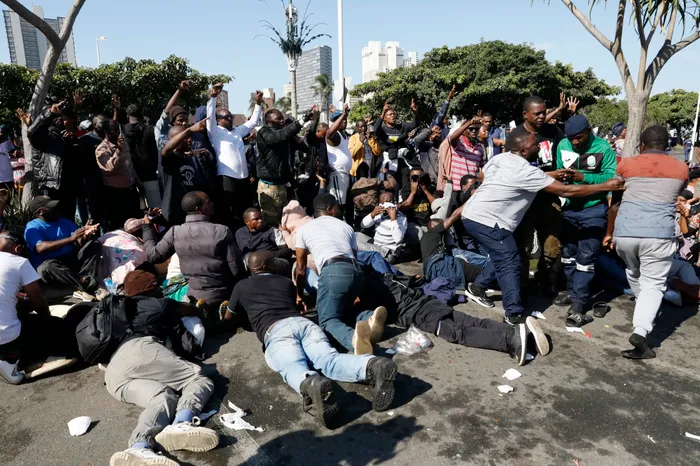
Supporters of the anti-illegal immigration organisation March and March and foreign nationals in a confrontation outside Durban’s Diakonia Centre on May 21. President Cyril Ramaphosa's roadmap for navigating a complex challenge is a step in the right direction. It rejects xenophobia and lawlessness while committing to effective governance, says the writer.
Image: Doctor Ngcobo / Independent Newspapers
Dr. Reneva Fourie
President Ramaphosa’s address on June 7, deserves commendation for confronting a serious national crisis with sincerity, balance and constitutional clarity. The address acknowledged the genuine concerns of South Africans regarding illegal immigration, pressure on public services, unemployment, crime and labour market insecurity.
At the same time, it reaffirmed the rights and dignity of all people within the country and rejected xenophobia, Afrophobia, racism and lawlessness. The speech provided a solid foundation for tackling the crisis through decisive state action rather than division.
The growth of anti-foreigner sentiment in South Africa emerges from a combination of economic, social, political and institutional factors that have accumulated over many years. The country continues to face extremely high levels of unemployment, especially among young people.
Large sections of the working class and poor communities experience daily hardship, declining living standards and limited opportunities for advancement. In such conditions, frustration often seeks a visible target. Foreigners who live and work in these communities become the most immediate and accessible focus for grievances rooted in deeper structural problems.
Economic insecurity remains one of the most significant drivers of these sentiments. Many South Africans struggle to secure employment, and competition is growing across sectors characterised by low wages and precarious working conditions.
Where employers exploit undocumented workers, labour standards are weakened, and resentment grows. Communities witnessing these practices often conclude that migrants are responsible for the deterioration of employment prospects.
The President correctly identified exploitative employers as a central part of the problem. Illegal employment practices create divisions among workers while allowing those who profit from cheap labour to escape scrutiny.
The informal economy has become another site of tension. In many townships and urban settlements, foreign-owned or foreign-operated businesses have established strong commercial networks and supply chains.
Some local traders perceive themselves as being disadvantaged in accessing finance, stock, infrastructure and business support. These perceptions contribute to the belief that economic opportunities are being lost within communities already facing poverty and exclusion.
Such frustrations are frequently directed at foreign entrepreneurs rather than at the broader economic conditions that limit opportunities for both citizens and migrants.
Weaknesses in migration management have further intensified public dissatisfaction. Delays in processing documentation, administrative backlogs, corruption and inconsistent enforcement have undermined public confidence in state institutions. Some citizens believe that immigration laws are not being effectively implemented.
Public concern has also been heightened by the perception that some criminal syndicates involved in drug trafficking, human trafficking, extortion, illegal mining, money laundering and other organised criminal activities exploit irregular migration routes and undocumented networks to facilitate their operations.
These criminal activities undermine community safety, place additional pressure on law enforcement agencies and reinforce demands for more effective border management and immigration enforcement.
While the overwhelming majority of foreign nationals are law-abiding, the visibility of transnational criminal networks has contributed to public fears and has often led to unfair generalisations about foreign communities as a whole.
When confidence in formal systems declines, some groups attempt to assume functions that properly belong to the state. Groups such as March to March have organised protests and marches in cities like Pretoria, Johannesburg and Durban, demanding stricter controls and even issuing deadlines for undocumented foreigners to leave. These actions have sometimes escalated into intimidation, violence and displacement targeting black Africans in particular.
Vigilante-style confrontations have occurred where individuals demand proof of status, leading to harassment, assaults and looting of foreign-owned businesses. Ethnic and tribal slurs occasionally surface, mixing anti-foreigner rhetoric with internal divisions.
Such developments risk destabilising social cohesion and diverting attention from root causes such as slow economic development, inadequate public investment and structural barriers to job creation.
Social media has also played a significant role in shaping public attitudes. Misinformation, fabricated statistics and sensational claims circulate rapidly across digital platforms. Stories involving crime, employment or service delivery are often presented without context and are sometimes falsely attributed to foreign nationals as a group.
Repetition of such narratives contributes to fear, suspicion and hostility. The President was correct to warn against misinformation campaigns that deepen divisions and weaken social trust.
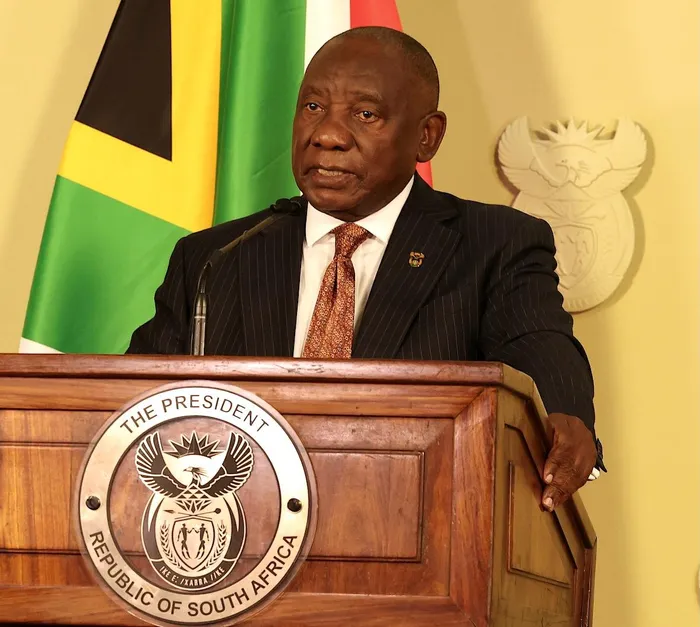
President Cyril Ramaphosa addressing the nation on his government's roadmap to resolve the country's immigration conundrum on June 7.
Image: GCIS
Historical and social factors also contribute to the current climate. South Africa remains marked by profound inequality and spatial exclusion. Many communities continue to experience inadequate housing, poor infrastructure and limited public services.
When resources appear scarce, competition for access to schools, healthcare, housing and employment becomes more intense. Migrants are frequently perceived as competitors for these resources. This perception persists even when the underlying causes lie in broader developmental challenges and unequal patterns of economic growth.
The specific targeting of black African migrants reflects additional dynamics. South Africa's migration patterns are heavily connected to neighbouring countries and the wider African continent.
Migrants, who have historically contributed significantly to the building of the country’s economy and even formed part of early trade union formation, often live in working-class communities where economic pressures are greatest.
Their visibility within local economies makes them more vulnerable to blame during periods of social strain. Negative stereotypes and prejudices can then transform legitimate concerns about governance and enforcement into hostility directed at entire groups of people.
The President's address acknowledged these challenges and reaffirmed that enforcing immigration laws is the state's responsibility. This principle is vital for maintaining public order and protecting constitutional rights.
The announced measures: stronger border management, anti-corruption efforts, enhanced labour inspections, dedicated immigration courts, and improved regional cooperation, establish a framework for addressing illegal immigration lawfully and transparently.
Ending outsourcing and privatisation, along with increased public investment in infrastructure, industrialisation and job creation, are also crucial to address underlying economic pressures. By rigorously enforcing laws while preventing violence and intolerance, the state can ensure stability and foster a culture of shared humanity.
The President should build upon his framework through sustained engagement with all relevant stakeholders. Communities expressing grievances must be given structured platforms to voice their concerns.
Foreign nationals, refugee organisations, labour movements, business associations, faith-based institutions, traditional leaders, local government structures and civil society organisations should also participate in these engagements.
Such dialogue can help different groups better understand each other's experiences, frustrations and expectations. It can also reduce the space for misinformation and promote practical solutions grounded in shared interests.
Regular public reporting on the commitments outlined in the President's address will be equally important. Communities need to see measurable progress regarding border management, anti-corruption initiatives, labour law enforcement and immigration reform. Transparent reporting can strengthen public confidence and demonstrate that the government is responding effectively to legitimate concerns.
At the same time, the processing of documentation for genuine refugees, asylum seekers, scarce skills economic migrants and foreign relatives and spouses of South Africans should be expedited.
Efficient and lawful systems reduce uncertainty, improve compliance and strengthen the integrity of migration management. They also ensure that individuals entitled to protection, employment or family reunification are treated fairly and with dignity.
The President's address provides a valuable roadmap for navigating a complex challenge. It rejects xenophobia and lawlessness while committing to effective governance.
By addressing economic insecurity, strengthening institutions, enforcing laws consistently and fostering dialogue among all affected groups, South Africa can reduce tensions and build greater social cohesion. The principles and actions outlined by the President deserve support.
* Dr Reneva Fourie is a policy analyst specialising in governance, development and security.
** The views expressed do not necessarily reflect the views of IOL or Independent Media.