Ramaphosa Silent On Holding The Political Elite Accountable
SONA 2026
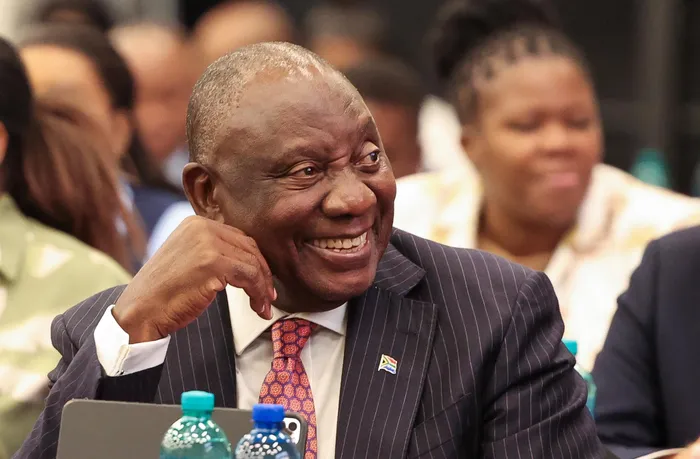
President Cyril Ramaphosa at the conclusion of the SONA 2026 debate held at the Nieuwmeester Dome, Cape Town on September 18.
Image: GCIS
Prof. Bheki Mngomezulu
In his recent State of the Nation Address (SONA) on February 12, 2026, President Cyril Ramaphosa assured the nation that the government is determined to root out corruption and criminal activities within municipalities. After reporting that 56 municipalities did not meet their set requirements, Ramaphosa promised that municipal managers who were found to have transgressed will be formally charged.
Many South Africans felt that this was refreshing and revived hope that the government was serious about rooting out corruption and addressing mismanagement in the country. Some even applauded Ramaphosa’s administration for the planned cleaning-up process. Others attributed the credit to the multiparty coalition, arguing that under Ramaphosa, the ANC had failed to address corruption and mismanagement.
There is credence in both viewpoints. Unfortunately, they both miss the bigger picture in the same way that the president missed it. The first question that arises is: Do officials act alone, or do they act in cahoots with the political elite? If the latter is the case, what difference would it make to focus on officials and leave the political elite out of scrutiny? In other words, would such a decision not amount to addressing the symptoms of an ailment while leaving the disease untouched?
These questions implore us to reflect on what has been revealed in the ongoing Madlanga Commission thus far. While it is true that the Commission has not yet concluded its work, it is an indisputable fact that some of its revelations point to a deep-rooted problem which involves many actors.
The reality is that officials are not a homogeneous group. Some of them were appointed to their positions under dubious circumstances. They received the nod not because they were the best candidates, whose appointments were premised on meritocracy. Instead, their appointments were politically driven. In those instances, officials feel indebted to their principals to the extent that they might do wrong things knowingly to appease their bosses.
In such cases, coming hard on the officials while leaving the political elite untouched would be a wasteful exercise that would not produce the intended results.
Another group of officials are those who are properly qualified with the requisite skills and knowledge. They know what must be done in their different portfolios. However, they are instructed by their political principals to do wrong things that will benefit the political elite and their friends. If such officials do not toe the line, they run the risk of losing their jobs.
When corruption, maladministration and mismanagement happen, it is these officials who are on the receiving end, not politicians. Interestingly, whenever the Auditor-General (AG) makes a finding against any unit, the political elite claims innocence. Some even assure the AG that they will implement consequence management.
When they do that, they do so selectively. Those who are in their good books are protected, while those who are honest become sacrificial lambs. The understanding that everyone is equal before the law, as the Constitution states, is thrown out of the window.
It was interesting to listen to the President saying that he was going to appoint a water crisis committee that would assist in addressing the many challenges associated with water supply across the country. Indeed, it is true that many communities struggle to access clean and reliable water. Provinces like Gauteng, Limpopo, Eastern Cape, KwaZulu-Natal and others have seen various communities struggling to access water.
But is the water crisis committee the answer? Does the fact that the President will chair the committee make any difference? Have we properly diagnosed the problem, or do we just make assumptions? Specifically, did the President do a proper diagnosis of the problem before making such a public statement? If not, then this will be just another committee in the same way that we have had one commission after another, but did not see tangible results.
If the President is serious about propelling this country in the right direction and rooting out both corruption and mismanagement, the first step is to establish where the problem lies. For example, Jozini Dam has more than enough water. It is released to the Uphongolo River and eventually allowed to go to the Indian Ocean. Meanwhile, residents have no running water – not even in communal taps. Will the water crisis committee address this issue when there is evidently no water crisis at Jozini, but failures by the political elite and the officials to do the right things?
Secondly, the President must ask himself, what role does the political elite play in the challenges that engulf municipalities?’ Are most of the problems created by the officials or by their political principals?
Linked to that is the time we are in of coalition politics. What role does that play in creating or worsening challenges found in municipalities? Is our country well-equipped and experienced to run coalition governments? What lessons can we draw from abrupt reshuffles happening in municipalities like Ekurhuleni and instability in municipalities like Nelson Mandela Bay?
Given this situation, should the focus not be on addressing these questions instead of constituting structures such as the water crisis committee or the many commissions the country has?
Put succinctly, Ramaphosa’s concerns about the state of our municipalities are understandable. As citizens of this country, we share his concerns. But his approach in addressing these challenges misses the point. He must do a proper assessment of the problem, identify the culprits from both the side of the officials and that of the political elite. Once that goal has been achieved, proper mechanisms should be put in place to address identified challenges.
Any attempt to target officials just because they have no political power would be a misplaced intervention which lacks honesty and rationality. The President does not have to be directly involved in committees if he has set clear parameters within which the officials and the political elite must act.
If his promised ‘New Dawn’ has not materialised, will his water crisis committee work?
* Prof. Bheki Mngomezulu is Director of the Centre for the Advancement of Non-Racialism and Democracy at Nelson Mandela University.
** The views expressed do not necessarily reflect the views of IOL, Independent Media or The African.