SONA 2026: Ramaphosa Must Leverage Economic Uptick for Structural Transformation
STATE OF THE NATION ADDRESS
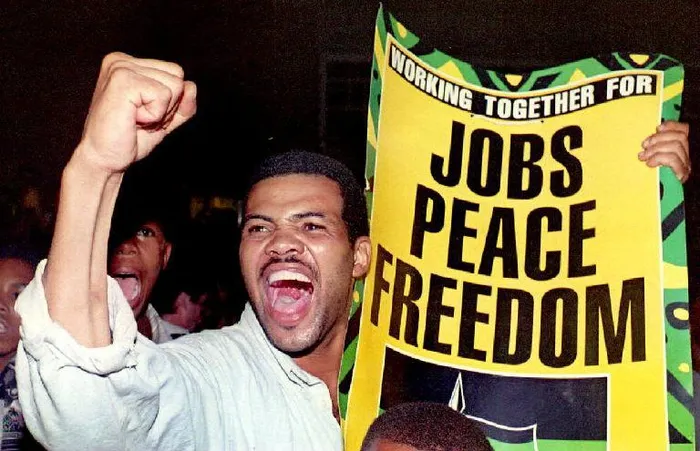
AN ANC supporter with an election manifesto poster a election campaign meeting in Promosa, Potchefstroom on January 30, 1994. The recent modest economic uptick provides an opening to pursue structural transformation. The government must ensure this turnaround is felt in the lives of ordinary South Africans, not just captured by the wealthy, say the writers.
Image: AFP
Dr. Gilad Isaacs, Dr Kelle Howson, Liso Mdutyana and Juhi Kasan
The recent modest economic uptick provides an opening to pursue structural transformation. Ahead of the State of the Nation Address (SONA), our advice to President Ramaphosa is simple: use it or lose it.
The President, along with National Treasury Director General Duncan Pieterse, have touted an economic ‘turnaround’, including in South Africa’s public finances and in state-owned enterprise (SOE) service delivery.
The government must ensure this turnaround is felt in the lives of ordinary South Africans, not just captured by the wealthy. South Africa cannot afford to miss the opportunity to take advantage of the more favourable conditions to fundamentally transform its economy.
Nor should we allow the narrative that South Africa has ‘turned the corner’ to generate complacency, or blind us to the urgency of addressing the multiple crises facing the country.
The SONA must reveal how the government plans to harness improvements in energy, freight, and logistics, as well as the current commodities boom, to drive job creation, bolster public services, and redistribute resources to the poorest households.
Here we take stock of the current economic moment. We show that modest improvements in the GDP outlook and public finances, including improved revenue collection, have not necessarily translated to improvements in employment, gender inequity, poverty, and reduced hunger.
We outline concrete measures the President should commit to in the SONA, to harness the improving economic environment, and build a foundation for sustained, inclusive transformation.
Modest GDP Improvements And Network Industries
While the South African economy expanded at a slightly faster pace in 2025, a projected 1.2%, this is a fraction of the level needed to make a meaningful dent in unemployment.
Population growth over the last 15 years means South Africans are poorer today than in 2010 and nowhere near the National Development Plan 2030 target. In fact, GDP per capita is lower today than the 2010 baseline, when the NDP was adopted.
Still, agriculture, mining, trade, and finance were resilient in 2025 and were collectively responsible for GDP growth in the face of the United States’ threats to not extend AGOA and to impose a trade tariff of 30% on many South African goods.
The mining sector was boosted by year-on-year positive growth in production, sales, and higher mineral prices. The agricultural sector, as measured by gross value added, grew positively in the first three quarters on account of improved port logistics and favourable weather conditions.
The banking industry saw an increase in the value of extended loans and in net interest income and non-interest revenues in the first six months of 2025. However, this was not accompanied by growth in key productive sectors, particularly manufacturing.
Much of the improved performance is underpinned by an improvement in the network industries – energy, freight rail, and ports – dominated by state-owned enterprises.
Significant gains were made in the availability of electricity, with most of the country escaping loadshedding for much of 2025, attributed to improved maintenance and additional generation capacity. However, households confront rapidly rising energy prices and ‘load reduction’.
In freight rail, Transnet reported that “the rail volume performance is higher than the prior period, reflecting an increase of 4.4% to 81.4 metric tons” in the six months to September 2025, though the division continued to be plagued by infrastructure and security challenges.
Commuter rail transport remains inaccessible to many, although there has been some improvement. Volumes increased in many of Transnet’s port terminals due, in part, to the greater availability of equipment.
These improvements are largely the result of the implementation of government action plans – more frequent and intensive maintenance, as well as higher fixed investments. The effect of private sector involvement remains to be seen in the coming years as more private companies are integrated into the network industries.
The stabilisation in energy, logistics, and freight has enabled the economy to better take advantage of the recent commodity boom in the mining industry, while in the previous commodity boom, an estimated US$26.7 billion in iron ore and coal export was forfeited due to failures in freight rail.
Overall, we see that public finances and economic growth prospects appear to have weathered the increased geopolitical uncertainty relatively well.
GDP forecasts were unchanged in the MTBPS, despite global economic headwinds, and nominal interest rates on government bonds (the cost of public borrowing) decreased for short and long-term bonds.
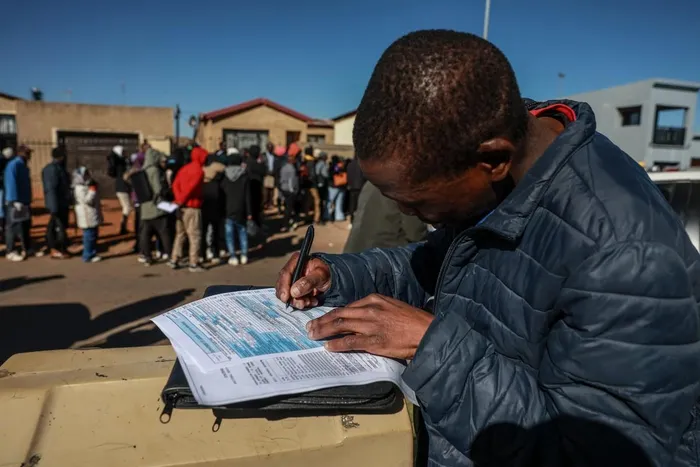
An unemployed youth fills in the Department of Unemployment and Labour work seeking registration form while queuing with others at a centre in Chiawelo, Soweto on June 27, 2025. South Africa needs a new macroeconomic framework where fiscal, monetary, trade, industrial, and social policy are better coordinated towards the objective of industrial development, employment, and structural transformation, say the writers.
Image: AFP
Employment and Investment Stagnating
Despite the resilience in the growth outlook, official (narrowly defined) unemployment declined by only 0.2 percentage points to a rate of 31.9% (or over 8 million unemployed) by September 2025. The expanded unemployment rate was a shocking 42.4%, or a total of 12.5 million unemployed people. The labour market is not creating jobs at anywhere near the rate it would need to be just to outpace the increase in the labour force each year.
While 109,000 people entered into employment in the year to September, 126,000 ‘discouraged workseekers’ gave up on looking for jobs altogether. Approximately 40 to 45% of young people are not in employment, education, or training (NEET). This underscores the structural labour market exclusion that results in permanent loss of human capital, further stress on the working population to provide for the young and elderly, fiscal pressures, and weak productivity and tax base growth.
The persistently high unemployment rate is not due to ‘laziness’, as government Ministers have been heard to claim. This is largely because the South African economy simply does not generate enough jobs to go around. Marginally better growth in commodities, agriculture, and financial services will not change that. We need jobs-intensive growth, underpinned by industrial policy, particularly in tourism, construction, infrastructure, manufacturing, and agro-processing.
Increasing levels of investment are essential to achieving this. In 2025, the investment rate fell below 15%, far below the rate of 20 to 25% normally considered necessary for sustained growth, and even lower than the 2023 levels.
The much-touted R1 trillion in infrastructure spending over the medium term, much of it centring on Public-Private Partnerships (PPPs), is way below the R800 billion per year needed to achieve NDP public investment targets. While the private sector sits on hoards of uninvested cash, government austerity continues to strangle public investment.
Women And The Care Economy
At the same time, not everyone can compete equally in the labour market. Women face higher constraints due to the weight of unpaid care work. The narrow unemployment rate for women stands at 35.9%.
In the second quarter of 2025, women were eight times more likely than men to be ‘homemakers’ not participating in the formal labour force. The work they do extends far beyond household chores and includes caring for young children and older persons, supporting sick relatives, travelling to markets, clinics, and schools to secure basic goods and services, collecting and transporting water and fuel, preparing food, and undertaking sanitation tasks. This work is all critical to a functioning economy and the reproduction of the workforce.
Cuts to public services in recent years have further heightened the burden on women who need to fill the gap left by the state. At the same time, caregivers have much less access to income from work or social security.
Alongside addressing structural unemployment through jobs-intensive growth, we need to better support caregivers to perform work in the home, through both income support and investment in services like early childhood development, elder care, running water, reliable electricity, healthcare, and integrated sanitation.
Poverty And Hunger Remain High
Recent Statistics South Africa figures seem to show a steady reduction in some measures of poverty since 2006.
However, due to historical reweighting (shifts in how poverty is measured), poverty at the upper-bound poverty line is now higher than indicated in previous reports – an astonishing two-thirds of the population, or 66.7%, having risen from 39.1 million in 2015 to 40.8 million in 2023.
What is clear and obvious to anyone who steps out of their front door is that poverty is unacceptably high.
While South Africa is a relatively wealthy country at a macro level and produces more than enough food for everyone to have a basic, nutritious diet, food security seriously deteriorated between 2019 and 2023.
The number of severely food-insecure people increased by 2.8 million, to 8 million people, and the number of food-insecure people increased by 3.6 million to 17.8 million people. Households with children were most at risk. Economic improvements have not yet translated into the most important metric, food security.
Social grants are a critical bulwark against hunger. 9.2 million more people would be living in extreme poverty without them. But the grants are nowhere near enough, in value or in reach, to eradicate hunger. The child support grant, at only R560 per child, falls woefully short of the cost of feeding a child a basic, nutritious diet, calculated by PMBEJD (Pietermaritzburg Economic Justice and Dignity) at R948.18. The SRD (R370) grant is now less than 44% of the food poverty line.
The basic income support (BIS) policy remains deadlocked and will apparently only go back to Cabinet in March 2027. Meanwhile, vulnerable people are being stripped of their grants through flawed and exclusionary ‘cost-saving’ and ‘anti-fraud’ measures.
To protect the most vulnerable and to ensure the gains of growth are shared and sustained, we need to urgently fill the holes in our social safety net. We must move away from the costly policing of beneficiaries.
Transitioning to a simpler, more universal and unconditional system, pegged to the national poverty lines, would redistribute wealth, end hunger, and draw millions into the economy, massively stimulating growth in a positive feedback loop.
Meaningless Growth
While we desperately need growth to enable a transformative agenda, growth alone will not be inherently transformative. If it is concentrated in sectors of the economy which contribute little to the creation of decent jobs, like finance, and if it is not reinvested into public services, social security, and infrastructure, growth will not result in tangible gains for the population.
The Constitution mandates the government to progressively realise socioeconomic rights, like the right to food, water, housing, healthcare, and social assistance. But we are failing to meet constitutional and NDP commitments, including on employment, gender equity, poverty, and hunger.
As we approach both the sustainable development goals and NDP end dates, and begin to formulate a new long-term strategy for South Africa, we need an urgent reevaluation of the capacity of marginal reforms to deliver the necessary pace of change.
We cannot be satisfied with tinkering around the edges of the economy. Structural economic transformation, which substantially diversifies the economy, generates large-scale employment, and redistributes wealth and income, will not happen, as the history of developmental states shows, without a deliberate state-led programme to shift our economic trajectory.
We also need to mainstream metrics by which to assess our progress that extend beyond GDP alone. While GDP remains a useful indicator of the size and pace of economic activity, it provides only a partial picture of how people are actually faring.
It does not show whether growth is broadly shared, whether households are more financially secure, or whether living standards have meaningfully improved. Nor does it capture much of the work that sustains the economy in the first place – like care and housework.
To track tangible improvements in people’s lives, GDP should be complemented by broader indicators that capture outcomes such as well-being, access to essential services, economic security, and inequality reduction. Composite measures, like the United Nations Development Programme (UNDP) Human Development Index, combine income-based metrics with social indicators to provide a more complete and policy-relevant evidence base.
This helps to identify where public resources should be allocated to improve access to, and the quality of, essential services and public infrastructure. The inclusion of unpaid care and household production in the national accounts is also essential to properly recognise this work and ensure policy and budgets reward and redistribute this labour.
A balanced framework would ensure that economic performance is judged not only by the pace of growth or increases in production, but by the extent to which it expands opportunity, strengthens human capabilities, and improves material living conditions across the population.
Improved Economic Indicators
This is not to say that the improvement in some economic metrics is not a positive development. But these improvements should be seen as a means to facilitate transformation, rather than an end in itself. The improved economic conditions can provide a springboard for a more expansionary macroeconomic package.
The lower cost of government borrowing will, per Duncan Pieterse, “free up resources for critical frontline services and investment in public infrastructure”. However, left to their own devices, and wedded as they are to the quest for larger primary surpluses, the National Treasury cannot be trusted to rise to the occasion.
South Africa needs a new macroeconomic framework where fiscal, monetary, trade, industrial, and social policy are better coordinated towards the objective of industrial development, employment, and structural transformation.
The new 3% inflation point target is a major policy shift, coupled with discussions to end the prime lending system. While price stability is essential, macroeconomic stability must also include employment stability, investment growth, and productive capacity.
The South African Reserve Bank (SARB), for instance, can do more to support industrialisation without abandoning price stability, by:
(1) adopting a dual policy rate regime offering lower-priced credit for developmental investment (for instance, via infrastructure bonds, industrial credit and concessional finance, green energy, and SOEs), and
(2) recapitalising the Development Bank of Southern Africa (DBSA), the Industrial Development Corporation of South Africa (IDC), and public banks for infrastructure projects which would lower the entire cost structure of the economy, thereby reducing inflation structurally.
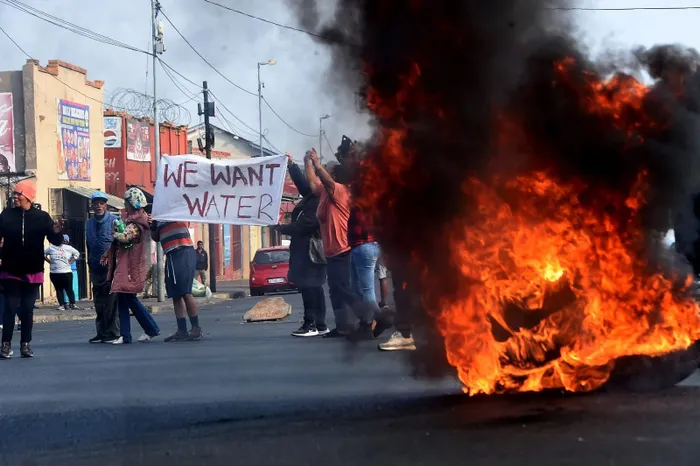
Johannesburg residents venting their anger over persistent water cuts in the country's economic hub. Structural transformation also means that as the economy grows, South Africa can sustain that growth through adequate infrastructure and service provision, say the writers.
Image: Itumeleng English/Independent Newspapers
This approach would help to close the missing link in South Africa’s monetary policy, namely a developmental monetary transmission channel, and allow the SARB not only to fight inflation but also to actively transmit cheap, stable, and predictable capital for development.
Similarly, we must look beyond market-centric approaches to the provision of infrastructure. The government's position in recent years has been to allow more private enterprises to enter into the supply of critical utilities.
This will likely further increase already rising cost pressure, as private companies double down on full cost recovery and cost-reflective tariffs while sidelining cross-subsidisation approaches.
While the stabilisation of electricity supply and freight transport could encourage businesses to increase capacity and potentially undertake more hiring and investment, it is simply not enough that ports and rail are up and running and ready to deliver raw minerals to China, Switzerland, and the United States.
Instead, responsive industrial policy must enable domestic companies to participate in the more lucrative stages of the minerals and manufacturing value chains, such as processing and marketing.
Clear policy and legislation are needed to give effect to this, as has been done in other jurisdictions. We must ensure that domestically extracted minerals are input into local manufacturing sectors. For this to be possible, the government must adopt economic interventions that place the state at the centre of industrial development, rather than occupying a ‘regulator’ only role as it has done previously.
The paradigm of the state as simply fostering a positive environment for private business is a large part of why South Africa has failed to take advantage of previous commodity booms to structurally transform its economy.
Structural transformation also means that as the economy grows, South Africa can sustain that growth through adequate infrastructure and service provision for a growing workforce and consumption load.
This is often why developing economies have, in the past, been unable to sustain high levels of economic growth, because there has not been the commensurate investment in socioeconomic infrastructure to accommodate the full participation of the population in the economy. It is also what led to the past 20 years of loadshedding, as the government failed to maintain energy generation at the pace of growth and development of the economy in the mid-2000s.
Concrete Steps Towards Structural Transformation
The modest resilience of GDP over 2025, improved revenue collection, the commodities boom, and the improvements in network services give us an opening to embark on a pathway towards structural transformation.
We propose avenues to take advantage of this moment:
- Channel economic resources (minerals, finance, labour) and policies towards strengthening manufacturing and associated sectors, to drive job creation.
- Increase government investment in public infrastructure – expanding the gains made in network industries to improve public transport, data connectivity, water and sanitation, and access beyond existing economic hubs – to lay the foundation for sustained growth.
- Increase government investment in social services – like education and training, care infrastructure, healthcare, social security (including basic income support), and public safety – in order to ensure a skilled and healthy workforce.
- Ensure South Africa has sufficient resources to make these investments through more progressive taxation, such as by implementing a net wealth tax, and better revenue collection through a stronger and better-equipped South African Revenue Service.
- Adopt more responsive and expansive measures of progress, beyond GDP, to ensure that improvements in economic growth translate into real benefits for people, and allow for needs-based allocation of public resources.
- Continue to diversify South Africa’s trade and export markets, while actively fostering regional integration and collective African resilience.
- Capture all these approaches within a developmental macroeconomic policy framework that integrates fiscal, monetary, industrial, social, climate, trade, and labour-market policies into a coherent policy framework, centred on structural transformation.
South Africa cannot rely on simply ‘creating a conducive climate for private investment’ and then sit back and expect that the infrastructure, productive capacity, skills, and flow of financing that we really need will materialise. This is magical thinking. Stabilisation is a necessary but insufficient condition for creating economic prosperity.
While we should recognise the gains made, tentative as they may be, we must see these not as accomplishments, but as foundations. This is an opportunity to target much deeper structural transformation, sufficient to create the many millions of jobs required, provide comprehensive public services, and support all in South Africa throughout their lifecycle.
Let us hear about ambitious and transformative plans in the SONA, not a recounting of the significant but modest stabilisation gains made to date. That would signal that this is an opportunity that will be used, not squandered.
* The writers are based at the Institute for Economic Justice (IEJ).
** The views expressed do not necessarily reflect the views of IOL, Independent Media or The African.