Trump 2.0: A Year of Chaos and Institutional Sabotage
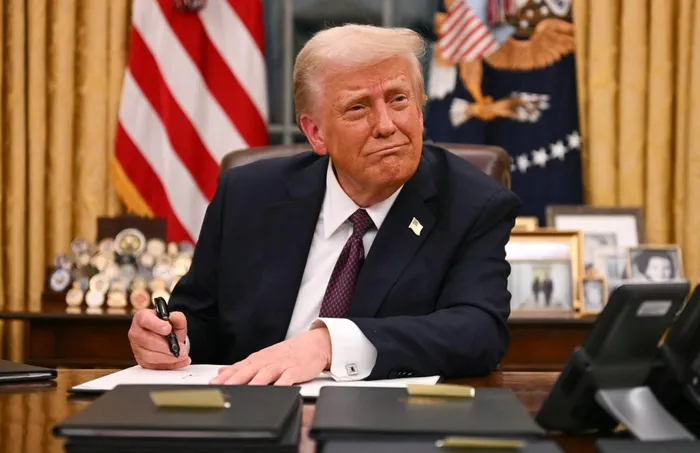
US President Donald Trump signs executive orders in the Oval Office of the White House in Washington, DC, on January 20, 2025. His conduct over the past twelve months has been characterised by sustained incompetence, volatility, and institutional sabotage, says the writer.
Image: AFP
Dr. Reneva Fourie
January 20 marks one year since Donald Trump returned to the presidency of the United States.
His conduct over the past twelve months has been characterised by sustained incompetence, volatility, and institutional sabotage. This has been a presidency governed by impulse and ignorance, where policy has been improvised in public and consequences dismissed as inconveniences.
The office has been reshaped into a platform for grievance and vanity, wielded by a man manifestly unfit for the responsibilities it entails. This personalisation of power has inevitably translated into policy, with the Trump administration’s limitations shaping not only the tone of governance but the substance of the US’s engagement with the world.
From the onset of his second term, Trump has pursued the deliberate weakening of multilateral institutions. The United Nations has been marginalised through erratic engagement, public hostility, and the politicisation of funding. Senior officials have been intimidated – or, as in the case of Francesca Albanese, sanctioned – for diligently executing their duties.
UN resolutions that criticised US military conduct were dismissed, and the repeated hosting of Netanyahu demonstrated Trump’s disrespect for the ICC arrest warrant against him. This behaviour has weakened collective diplomatic capacity and emboldened states that benefit from the collapse of cooperative norms.
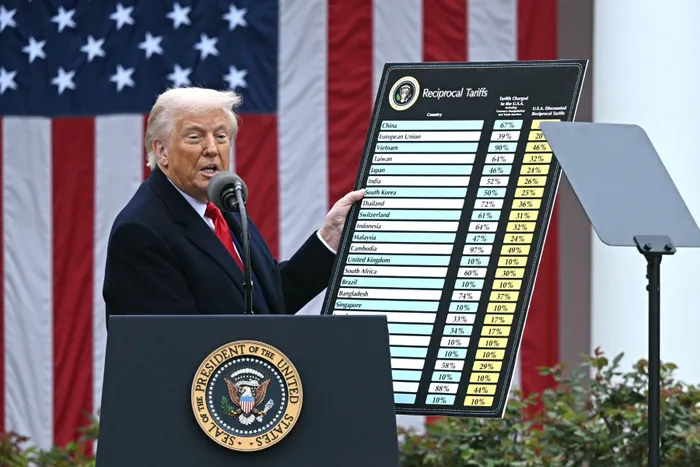
US President Donald Trump holds a chart as he delivers remarks on reciprocal tariffs during an event in the Rose Garden entitled "Make America Wealthy Again" at the White House in Washington, DC, on April 2, 2025.
Image: AFP
The World Trade Organisation has been subjected to similar destruction. Trump reintroduced sweeping tariffs on strategic imports within months of taking office, targeting allies and rivals alike. These measures were imposed outside established dispute processes and justified through simplistic claims of domestic development prioritisation. Retaliatory tariffs followed, disrupting agricultural exports and manufacturing supply chains.
Despite warnings from trade economists and industry bodies, the administration continued to escalate protectionist measures, demonstrating a fundamental disregard for the structure of global trade.
International law has been treated with open contempt. Over the past year, US forces have conducted targeted killings of alleged criminal and militant figures without judicial oversight or transparent evidentiary standards.
Naval operations have intercepted vessels in international waters, with crews detained or killed under loosely defined security justifications. The deaths without formal charges or trials reinforce the perception that executive suspicion now substitutes for legal process.
More recently, Venezuela’s President Maduro and his wife were abducted to face trumped-up charges of drug trafficking. This lawless exercise of force has not remained confined to individual targets but has expanded into a broader contempt for the territorial integrity of states.
Territorial sovereignty has been repeatedly violated. The Trump administration authorised cross-border military actions without host state consent, including operations in Latin America framed as anti-crime initiatives and in West Asia and Africa under the guise of national security. These incursions were conducted with minimal diplomatic engagement and accompanied by public threats of escalation.
Trump has revived an openly imperial worldview, treating states across multiple regions as instruments of US will rather than as sovereign equals. This posture has destabilised international relations far beyond the US’s immediate neighbourhood, normalising foreign interventionism and reintroducing power politics that undermine global stability.
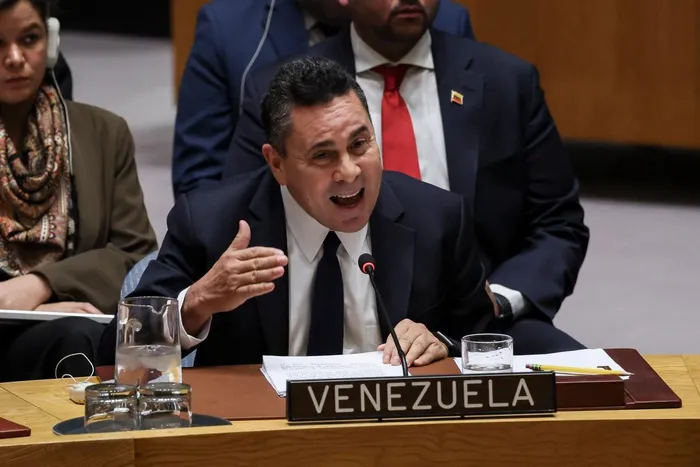
Venezuela's ambassador to the UN Samuel Moncada speaks during a United Nations Security Council meeting on US military actions against Venezuela, at United Nations headquarters on December 23, 2025 in New York. Trump has revived an openly imperial worldview, treating states across multiple regions as instruments of US will rather than as sovereign equals, says the writer.
Image: AFP
International alliances have suffered severe damage. NATO partners have faced coercive demands for increased military spending, often accompanied by explicit threats of US withdrawal from collective defence commitments.
Diplomatic engagements with European leaders have been marked by public humiliation and transactional bargaining. These confrontational interactions have also been accompanied by overt attempts to coerce allies into ceding strategic territory, using economic pressure as leverage to achieve personal and geopolitical goals.
Trump has pursued aggressive territorial ambitions, including repeated threats to annex Greenland, Denmark's autonomous territory, through threats such as imposing escalating tariffs on Denmark and other European allies unless the island is ceded to the US.
He has further escalated tensions by publicly criticising Norway for not awarding him the Nobel Peace Prize, declaring that he no longer feels obliged to prioritise peace and linking this personal grievance to his hardened stance on Greenland.
The same logic of domination that has driven Trump’s destabilising conduct abroad has been applied with equal force within the US itself. His second term has intensified the assault on civil rights, with gender equality, bodily autonomy, and social inclusion placed squarely under attack.
Gender rights have been systematically dismantled through executive orders that removed federal recognition of transgender identities. Federal agencies were instructed to reinterpret anti-discrimination laws to exclude gender identity protections. These policies have been reinforced by funding cuts to programmes supporting women and LGBTQ+ communities, despite clear evidence of increased vulnerability and social harm.
Women’s rights to reproductive healthcare have also been steadily eroded through federal restrictions on access to essential services, the expansion of conscience exemptions, and the withdrawal of funding from reproductive health providers, with disproportionate consequences for poorer and marginalised communities.
These domestic attacks on civil liberties have been mirrored by a broader embrace of racialised and exclusionary ideology. Trump has repeatedly courted white supremacist networks, both within the US and internationally, including ties to far-right groups in South Africa that promote racial hierarchies and resist integration.
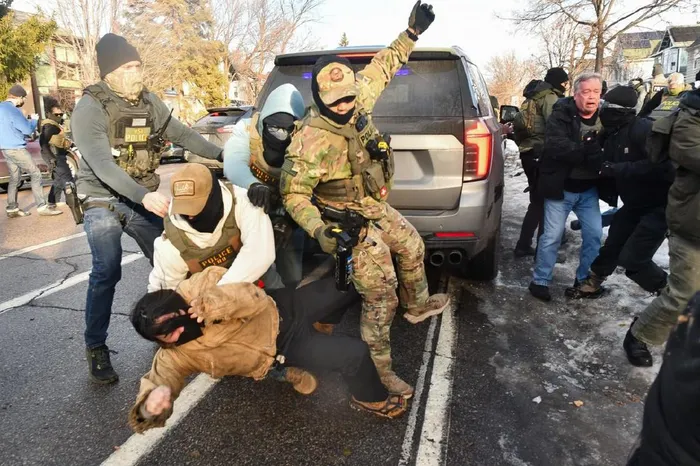
ICE and other federal officers detain a person during protests as ICE operates in a residential neighborhood in Minneapolis, Minnesota, on January 13. High-profile incidents of police violence have been exploited to advance narratives of order and repression, with federal forces deployed to cities governed by political opponents, says the writer.
Image: AFP
This alignment amplifies social divisions and undermines efforts to build inclusive, universal social cohesion, signalling that the administration views social unity as subordinate to the consolidation of power among preferred demographics.
The same approach that targets women, LGBTQ+ persons, and minority communities has defined Trump’s migration policy. Enforcement has descended into organised brutality, with mass deportations accelerated through expedited processes that bypass due process safeguards. In some instances, hundreds of migrants were transferred to foreign detention facilities, including arrangements with states, such as eSwatini, negotiated in secrecy.
Militarised units have been deployed to urban centres, producing widespread fear and arbitrary detention. Citizens increasingly carry identification at all times to avoid wrongful arrest, a direct consequence of racialised and politically selective enforcement.
Authoritarian governance has become entrenched across federal institutions. Trump relies heavily on executive orders to bypass legislative scrutiny, issuing decrees that restructure agencies and override regulatory frameworks.
Independent bodies have been gutted through mass dismissals and funding withdrawals, with civil service protections stripped from tens of thousands of employees, rendering them “at-will” and easier to remove. Between January and November 2025, roughly 335,000 federal workers left government service, a testament to the destabilising effect of administrative chaos.
With institutional independence dismantled, some other instruments of the state have been repurposed as tools of political enforcement. Federal agencies have been directed to pursue the president’s critics while shielding allies from investigation.
High-profile incidents of police violence have been exploited to advance narratives of order and repression, with federal forces deployed to cities governed by political opponents. Masked units have entered metropolitan areas under vague security mandates, bypassing local authorities and escalating tensions.
Democratic accountability has steadily eroded. Trump has publicly questioned the legitimacy of the mid-term elections and suggested suspending them when polling indicated losses for his party.
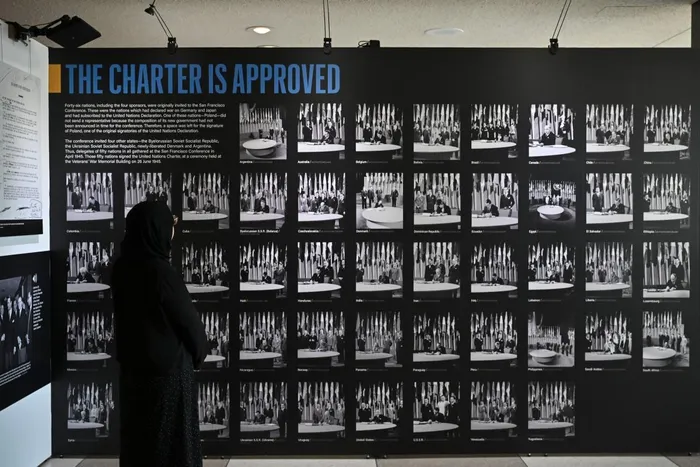
A viewer looks at the “UN Charter” exhibition ahead of the 80th anniversary of its signing at the United Nations Headquarters on June 20, 2025 in New York. One year into Trump’s second term, the record is unmistakable. The damage inflicted on democratic institutions, international law, and global stability will endure long after this term ends, says the writer.
Image: AFP
Media organisations critical of the administration have faced access restrictions and harassment. Journalists have been targeted through legal threats and orchestrated smear campaigns. Dissent has been framed as disloyalty, and scrutiny as sabotage.
This presidency exposes a deeper failure within the US society and a dangerous model for the global stage. Trump’s return to power reflects the political will of a substantial electorate willing to accept authoritarian governance in exchange for cultural affirmation and performative aggression. His connections to white supremacist groups reinforce racialised hierarchies.
Institutional erosion has been tolerated, ethical collapse excused, and ignorance celebrated as authenticity. The consequence is a society in which democratic norms, human rights, and the pursuit of universal equality are actively subverted.
One year into Trump’s second term, the record is unmistakable. This has been a presidency of chaos without strategy, cruelty without purpose, and power without understanding. The damage inflicted on democratic institutions, international law, and global stability will endure long after this term ends.
The lesson is stark. When ignorance occupies the highest office, democracy decays and the consequences extend far beyond national borders.
* Dr Reneva Fourie is a policy analyst specialising in governance, development, and security.
** The views expressed do not necessarily reflect the views of IOL, Independent Media, or The African.