BRICS 2026: Navigating Challenges and Opportunities for Global Cooperation
MULTILATERALISM
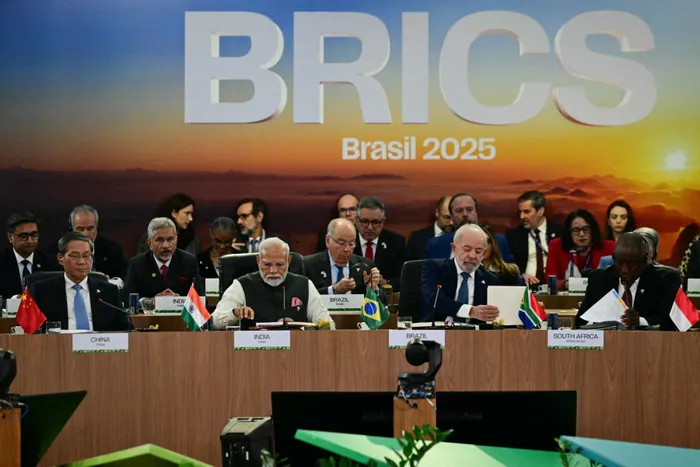
BRICS leaders at the 2025 summit in Rio de Janeiro, Brazil, on July 7, 2025. BRICS 2026 offers host India an opportunity to deepen a global agenda rooted in the UN Charter and the Pact for the Future, says the writer.
Image: AFP
Ashraf Patel
Trump's shock and awe goes rogue in 2026. The attacks in Venezuela, strikes at ISIS in Nigeria, ICE attacks on US citizens in Minnesota, and a slew of Trump tariffs and visa blocks to many nations are the opening salvos of Trump 2.0 in the second year of his second term in this most disruptive moment in the post-WW2 era.
The entire foundations of the post-WW2 world order and UN institutions are caught unprepared. BRICS nations enter 2026 facing volatile degrees of headwinds, wars, and rapid erosion. The US defunding of UN entities last week adds a layer of shock to the global system. Ironically, Trump is bringing his largest delegation to the World Economic Forum WEF in Davos at the time of its deepest cuts to the UN, suggesting a global deregulation agenda. Trump, the anti-Globalist? Not so, more the global opportunist.
India will chair BRICS in 2026 at a particularly volatile time. The graceful “Namaste” gesture captures India’s timeless spirit of warmth, respect, and harmonious collaboration. It's 2026 theme "Building for Resilience, Innovation, Cooperation and Sustainability".
BRICS in 2026 faces a vast array of challenges to the global order.
Trump Tariffs and WTO Reform
The Trump tariffs' iron fist position pushes for largely unequal trade deals with India, Kenya, South Africa, and AGOA Africa. US tariffs on Indian goods total 50 percent, including a 25 percent reciprocal tariff announced on April 2, and an additional 25 percent secondary tariff linked to India’s continued oil trade with Russia.
Trade negotiations between the nations have been strained since the US imposed 50% tariffs on Indian goods - the highest in Asia - in August. Washington has pushed for greater access to India's agricultural sector, a long-standing sticking point which Delhi has strongly resisted. Agriculture is the heart of India, and the cowboy gunslinger approach to Indian agriculture markets is deeply concerning.
The WTO needs serious reform. As BRICS and G77 nations face multitudes of Trump tariffs and EU trade barriers, there is a need for substantive reform of the WTO. Here, BRICS in 2026 can co-create a facility for the Global South nations' trade fund to buffer against tariff wars. The WTO Investment and Agriculture agreements need agreed solutions as the WTO prepares for an all-important ministerial in Cameroon in March 2026.
UN Funding Cuts
US cuts to UN budgets are cynical as well as opportunistic. US wars and militarism are mushrooming, creating refugees and immigration. war and trade wars that are undermining national economies, causing more people to immigrate at great risk. Yet the US is cutting funding to the UN, USAID, et al that support refugees.
Here, the BRICS nations, together with the EU and Gulf and Nordic states, would have to shoulder a heavier burden and fund UN entities that are doing important work relating to the SDG agenda. BRICS nations need to be bold in plugging the gaps and recommitments to the UN Charter and core support of UN entities dealing with the SDG agenda. BRICS nations can lead by implementing the UN Pact for the Future at the national and regional levels.
COP 30 commitments
BRICS offers an opportunity to refocus on climate change and mobilise resources for climate finance, especially for Africa and the majority world. The BRICS New Development Bank NDB can expand funding and climate finance capital, and BRICS platforms can accelerate climate technologies for nations in the G77 and Global South.
BRICS nations need to meet their Nationally Determined Contributions (NDCs) in line with the core COP agreements as agreed in Belem, Brazil. The BRICS Green Industrialization programs are relevant for the Global South, coupled with innovation as a key theme in 2026, offer major opportunities for BRICS plus nations and a viable model of balanced industrialisation. The BRICS core can provide nations with more climate resilience technologies and capacity.
Securing Peace and Development
The ever-increasing mushrooming of ‘never-ending wars’ is a hallmark of US foreign policy. Trump's war-peace playbook is exposed and is rooted in encouraging wars so the US alone can sell ‘evermore arms’ to nations at war.
For Africa, the mushrooming of conflicts in Sudan, Ethiopia-Eritrea, Northern Mozambique, and the West African – Sahel belt continues amidst climate change and less funding for UN peacekeeping.
In South East Asia, several mushrooming conflicts and hotspots simmer. From the Indian- Pakistan border wars, to the Bangladesh and Myanmar political turmoil, to the Thai-Cambodia border conflicts, the need for security and peace is paramount.
Here, the BRICS nations and the Shanghai Cooperation Organization (SCO) offer a long-standing format of stability and certainty in India's BRICS year.
In the past decade, India was being co-opted by Washington as an ally in Asia and the Pacific. Trump's raw and rogue approach is rapidly upending this narrative. From trade wars to lopsided regional partnerships to UN funding cuts to WTO chaos, these issues are causing deep consternation in New Delhi. This trend is set to be a key feature of Trump 2.0.
Hence, BRICS and G77 offer the best hope for the Global South and the North to save the international order, secure the UN SDGs, and ensure core multilateral institutions broaden their mandate and serve a development agenda.
BRICS 2026 offers host India and BRICS Plus a window, or an opportunity to deepen a global agenda rooted in the UN Charter and the Pact for the Future, and ensure multilateralism through a fair and equitable world order for the benefit of the Global South and the most vulnerable.
Will India step up to this bold task in 2026?
* Ashraf Patel is a Senior Research Associate at the Institute for Global Dialogue, UNISA.
** The views expressed do not necessarily reflect the views of IOL, Independent Media or The African.