From Liberation to Accountability: The ANC's January 8 Statement Reimagined
GOVERNANCE
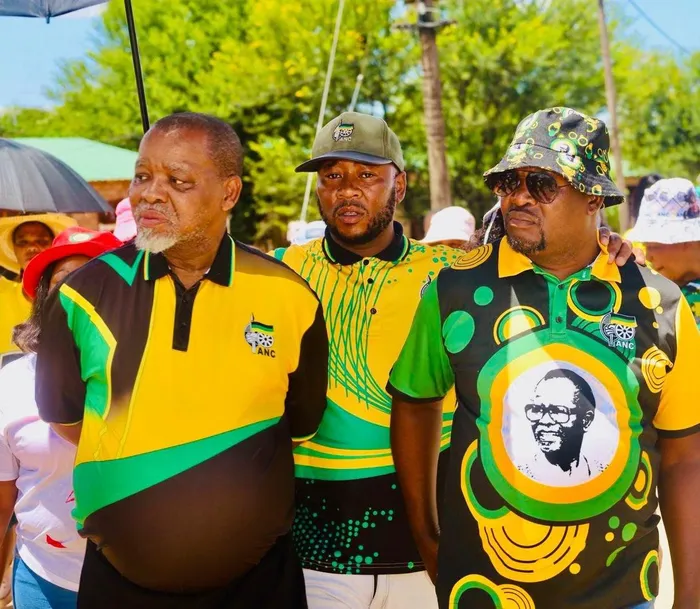
ANC National Chairperson Gwede Mantashe mobilising support for the ANC's 114th anniversary celebration on January 6. While recognising the ANC's indelible contributions to South Africa's liberation and democratic consolidation, the January 8 statement is notably losing its relevance, says the writer.
Image: ANC/X
Dr. Reneva Fourie
The African National Congress (ANC) is preparing to deliver its January 8 statement on January 10, 2026, at Moruleng Stadium in the North West Province, marking the party's 114th anniversary.
The January 8 statement has long occupied a central place in the political life of South Africans. Its meaning, authority and function have shifted alongside the evolving role of the ANC itself – from a liberation movement operating under conditions of illegality, to a governing party entrusted with the aspirations of a newly democratic society, and more recently to a leading but constrained actor within a Government of National Unity.
While recognising the ANC's indelible contributions to South Africa's liberation and democratic consolidation, the January 8 statement is notably losing its relevance.
This annual event, historically a pivotal instrument for strategic direction, now occurs amid structural poverty, persistently high unemployment and levels of violent crime that corrode social trust and human security. Instead of the usual celebratory rally, a reorientation towards direct community engagement and reconnecting with the populace, particularly with those affected by unresolved historical injustices, may better serve the party's renewal efforts.
Prior to 1990, the January 8 statement carried significant symbolic and practical weight. With the ANC banned and its leaders forced into exile, the annual address usually delivered by Oliver Tambo served as a compass for anti-apartheid resistance. It was a critical political intervention that served as an occasion for commemoration and morale boosting.
Anti-apartheid activists across the country would huddle around their radios, often in secrecy and at great personal risk, to listen to Radio Freedom. The statement shaped strategy, informed action and connected a dispersed movement across borders and continents. Soon after the broadcast, the underground network inside South Africa would circulate the statement in text form.
Activists would analyse its content and reflect on how best to implement its directives. In this context, the January 8 statement functioned as a living document. It offered political guidance, clarity of purpose and a sense of collective resolve at a time when open political organisation was violently suppressed.
Following the advent of democracy in 1994, the January 8 statement assumed a national orienting role. Benefiting from substantial electoral majorities, often exceeding 60 per cent, the ANC's pronouncements foreshadowed the State of the Nation Address and informed government planning frameworks. The statement provided coherence between the movement, the state and the broader public, reinforcing the idea that electoral victory translated into a mandate to lead social and economic transformation.
The contemporary moment is markedly different.
Economic growth has been anaemic, public institutions have been weakened, and the promise of a better life for all remains unrealised for millions. In parallel, the moral and political authority of the ANC has been eroded through its governance failures and the cumulative weight of unmet expectations.
The formation of a Government of National Unity has further reshaped the terrain. While it reflects a commitment to constitutional stability and cooperative governance, it also constrains the ANC’s ability to act decisively in accordance with its historic programme. The need to appease and accommodate partners with divergent ideological orientations has diluted the clarity of political messaging and policy direction.
Within this context, the annual January 8 statement carries far less significance than it once did. It no longer sets the national agenda in a meaningful way, nor does it mobilise society behind a coherent programme of action.
This diminished impact should be understood as a signal rather than a failure. It suggests that inherited forms of political ritual may no longer be appropriate to the tasks of the present. Large rallies, speeches and celebratory events consume considerable time, energy and resources.
Yet their capacity to speak to the lived realities of ordinary people appears increasingly limited, particularly in communities where daily life is shaped by violence, precarity and exclusion.A movement with the depth of history and tradition of the ANC ought to be capable of critical self-renewal. Its strength has always lain in its ability to listen, learn and adapt.
The reconsideration of how January 8 is observed could form part of a broader effort to reconnect with people in a substantive rather than performative way. In this regard, the day might be far better spent engaging directly with those whose lives reflect the unresolved contradictions of the democratic project. Few events symbolise these contradictions more starkly than the violence before and during the August 2012 Marikana Massacre.
The workers, families and communities affected by that tragedy continue to live with its consequences, both material and psychological. Their experiences speak to enduring inequalities in the labour market, failures of accountability and the persistent marginalisation of the working poor.
Dedicating January 8 to meaningful engagement with such communities would represent a powerful affirmation of the ANC’s foundational values. It would demonstrate a willingness to confront painful truths, to prioritise healing and to ground political reflection in the realities of those most affected by injustice.
Such engagement need not be symbolic or fleeting. It could involve listening, acknowledging harm, and committing to tangible measures that address both immediate needs and structural conditions.
This approach would not diminish the day's political importance. On the contrary, it would restore its substance. It would shift the focus from speeches and celebration to accountability, solidarity and renewal. It would signal that the ANC understands the gravity of the moment and is prepared to recalibrate its practices accordingly.
Throughout its history, the ANC has shown a capacity for reinvention in response to changing circumstances. From exile to negotiation, from liberation movement to governing party, it has navigated complex transitions while retaining a core commitment to human dignity and social justice.
Reimagining the purpose and practice of the January 8 observance should be seen as part of this adaptive tradition. In choosing genuine reconnection over ritualised performance, the movement would affirm both its historical legacy and its responsibility to the present.
* Dr Reneva Fourie is a policy analyst specialising in governance, development and security.
** The views expressed do not necessarily reflect the views of IOL, Independent Media or The African.